
You want to study architecture in France
France has nearly 30,000 architects.
The French Écoles Nationales Supérieures d’Architecture (ENSA) enrol around 19,000 students, 12 per cent of whom are international students. The proportion of female students at the ENSA is steadily increasing, with 57 per cent of students being female.
The graduate employment rate is around 85 per cent. Architecture courses cover the wide range of disciplines required for the development of architectural, urban and landscape projects.
Architecture schools are not subject to the differentiated tuition fees for non-EU students.
Higher schools of architecture
The Écoles nationales supérieures
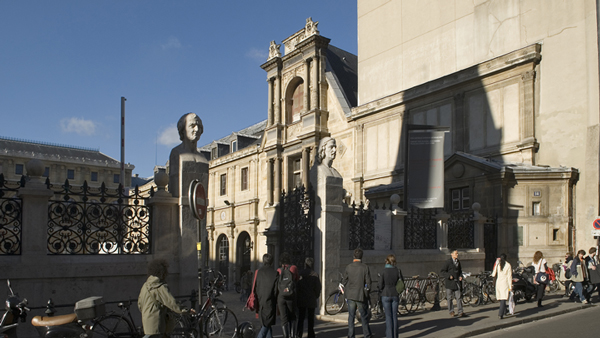

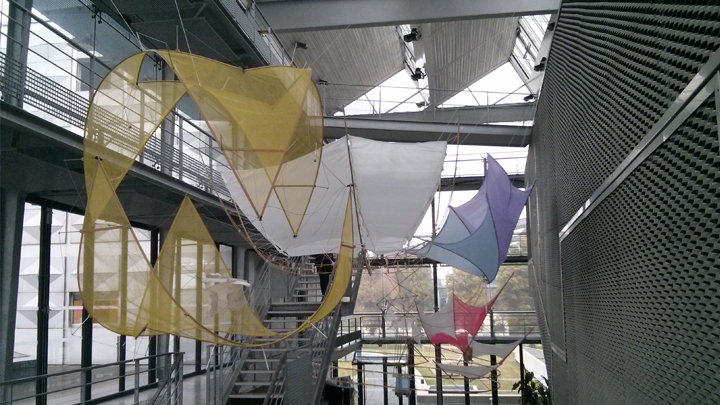
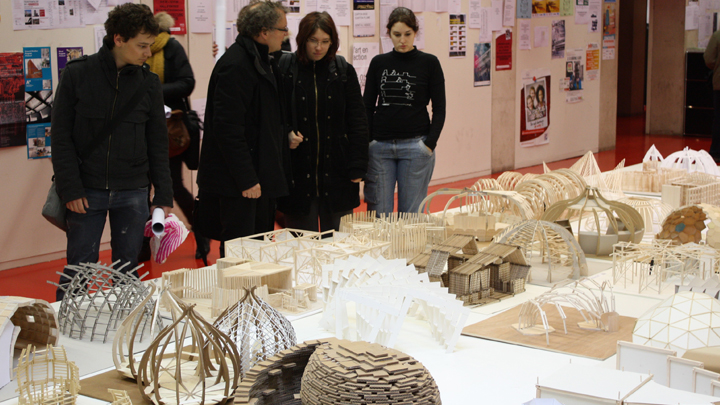
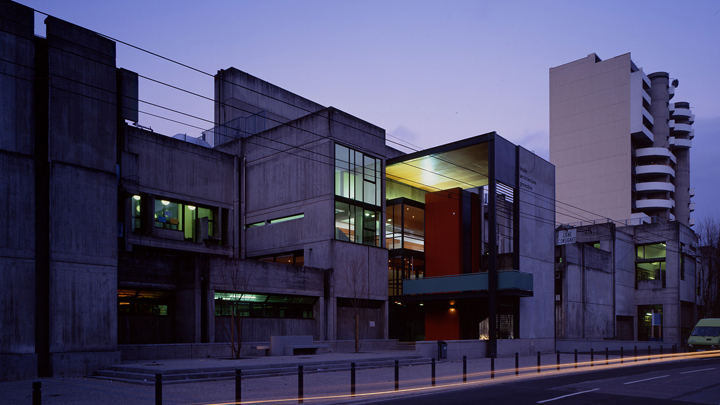
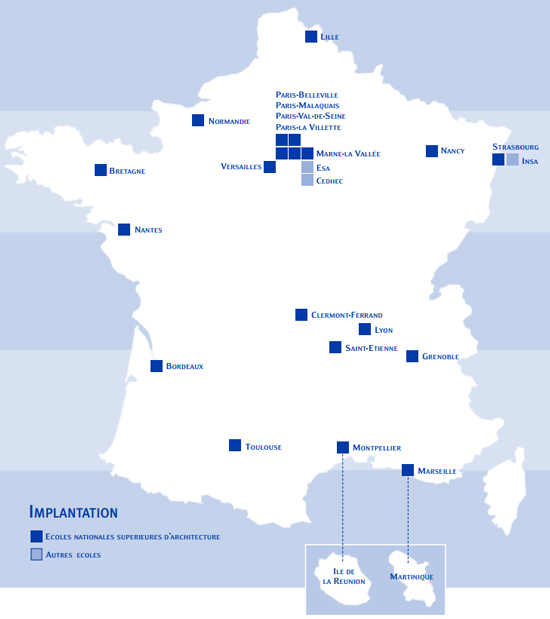
21 Public National Higher Schools of Architecture (ENSA) under the Ministry of Culture award national qualifications.
Others Higher schools
Two other schools are authorised to award qualifications recognised as equivalent:
- the National Institute of Applied Sciences (INSA) in Strasbourg, a public institution
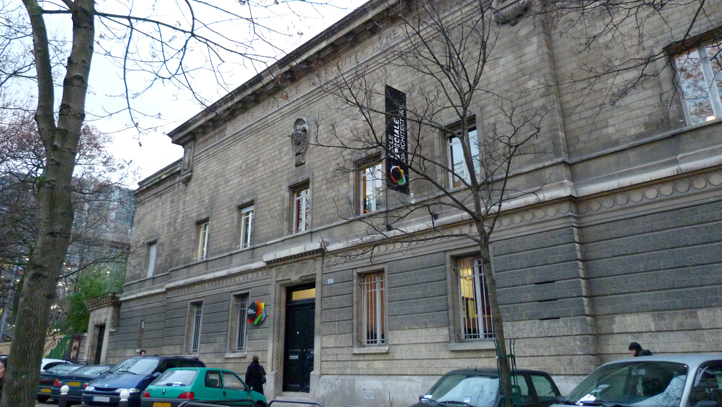
- the École Spéciale d’Architecture (ESA), a private institution
Architecture school admissions
French architecture schools are highly selective as they have very limited places. The admissions panel assesses applicants’ academic records, their knowledge of French, their motivation, their plans for further study, and evidence of prior learning and/or aptitude in architecture (high-quality projects, personal drawings, etc.).
After completing the baccalaureate or equivalent, admission to an architecture school is open to all candidates and is carried out via a procedure specific to each school or via the CampusArt application portal.
European qualifications are recognised under Directive 2005/36/EC of the European Parliament and of the Council of 7 September 2005. This Directive establishes a system for the recognition of professional qualifications within the European Union (EU) which also extends, under certain conditions, to other countries in the European Economic Area (EEA) and to Switzerland.
Qualifications from some countries outside the European Union are also recognised in France, notably through bilateral agreements.
A degree ladder consistent with the LMD system
Architecture courses form part of the European harmonisation framework based on the L-M-D system (Bachelor’s, Master’s, Doctorate).
To facilitate student mobility between institutions, these qualifications are accompanied by ECTS credits and a Diploma Supplement.
The architectural project is at the education center. The disciplines covered in the lectures and supervised workshops are:
- Architectural project: structural design, building envelopes, architectural details, project cost analysis, refurbishment;
- Urban project: a landscape, environmental and spatial approach;
- History and theory of architecture and the city;
- Representation of architecture: scale models, computer graphics;
- Science and technology for architecture: mathematics, geometry, knowledge of materials and structures, techniques for controlling indoor environments;
- Artistic expression and art history;
- Humanities and social sciences;
- Theories of urban planning and landscape architecture;
- Foreign languages.
Emphasis is also placed on sustainable development, taking into account major risks, rehabilitation and interventions on existing buildings.
Degrees in landscape architecture
Three schools, including the competition is common, prepare in 4years at the Diplôme de paysagiste DPLG. This contest open to graduates of L2 training is included in the Repertoire of the National Commission for Professional Certification (RNCP) – https://www.francecompetences.fr. The competition includes two rounds of eligibility: general knowledge about the landscape and written plastic from a website and an oral admission test descriptions.
The paysagiste DPLG project applies the theory to the field of landscape. This concept of “landscape” refers more broadly than design “parks and gardens.” The landscape designs projects and monitors performance in spatial contexts, cultural and social scales. It is involved in project development on public and urban space, the contemporary and historical gardens, areas dedicated to traffic, networks related to energy, dormant sites, attractions, heritage sites and protected. Knowledge affect the properties of plants, construction techniques, materials, viewing perspective, topography.
The National Graduate Landscape award confers the rank of master. The landscape DPLG degree is awarded after a further year.
- Bordeaux : National School of Architecture and Landscape Architecture
- Versailles : National Higher School of Landscape Architecture
- Lille : École Nationale Supérieure d’architecture et de paysage